


How To Get Your PADI Open Water Certification In Cancun

已更新:8月29日
Have you ever wondered what it feels like to breathe underwater, surrounded by reefs, turtles, and rays instead of traffic and phones? Our beginner-friendly scuba certification in Cancun ensures safety and comfort for all, including families and first-timers, turning that daydream into real life.

The PADI Open Water Diver course is your first full certification. Once you finish, you can dive to 18 meters or 60 feet with a buddy, almost anywhere in the world, as long as the conditions match your training and experience.
Cancun makes that journey much easier than most places. Warm water, clear visibility, short boat rides, and training sites like MUSA and Manchones are made for beginner scuba course Cancun trips.
In this guide, we will cover:
The PADI Open Water certification opens a world of exploration, giving you the confidence to dive anywhere and experience new adventures.
The basic scuba gear and the golden rule of scuba diving
The Manta Divers course runs in two days, with optional Cozumel and Junior paths.
Cancun for training
Tips for your first training dives and what comes next
You will see references to - head over for more info.
Your First Scuba Course: What PADI Open Water Actually Is
PADI Open Water Diver is the first full level on the recreational path. It certifies that you have learned:

How to use standard scuba gear safely
How to plan and make no-stop dives with a buddy
How to handle basic emergencies underwater and at the surface
The course is built around three parts that are the same worldwide:
Knowledge development
Confined water dives in a pool or pool-like conditions.
Four open water dives in the ocean or a lake.
Manta adapts that structure to local conditions so that your PADI Open Water Certification Cancun is:
Two focused training days on site once your PADI Open Water Diver e-learning is finished
Small groups with PADI instructors in the water on every dive
Calm training sites at MUSA, Manchones, and nearby reefs
The big difference between just trying scuba and getting certified is what you can do afterward. With a full card, you can:
Rent gear at dive centers worldwide
Join fun dives and boat trips without repeating the same beginner program.
Use your certification as a base for advanced, rescue, and specialty training later.
Scuba Diving Basics: Gear And The Golden Rule
Before you think about depth or destinations, it helps to understand the basics of what you will actually be wearing and doing underwater. Our equipment is selected for comfort and ease of use, making your first dives smooth and enjoyable.
Essential scuba diving equipment

During your course, you will get hands-on with:
Mask - lets you see clearly underwater
Snorkel - used at the surface between dives
Fins - make swimming more efficient
Regulator - delivers air from your tank to your mouth.
Alternate regulator - spare second stage for sharing air with a buddy
Buoyancy Control Device (BCD) - inflatable jacket that lets you float, hover, or descend
Tank - filled with compressed air for breathing
Weights - help you offset the natural buoyancy of your body and wetsuit
Wetsuit - keeps you warm and protects your skin
It feels like a lot on paper. In the water, with a patient instructor, it quickly becomes normal. One of the quiet joys of learning to dive in Cancun-style training is that you can practice these skills in warm water instead of a cold quarry.
The golden rule of scuba diving
If you remember only one phrase from this section, let it be this one:
Never hold your breath while scuba diving.
Pressure changes with depth. When you breathe slowly and continuously through your regulator, the air in your lungs stays in balance with the water around you. If you hold your breath while ascending, that balance breaks, and you risk lung overexpansion injuries.
So the answer to what the golden rule of scuba diving is is simple:
Breathe slowly and continuously.
Never hold your breath.
The second golden rule is just as important:
Never dive alone.
Always dive with a buddy and stay close enough to help each other.
Your PADI course will repeat these points many times, and you will practice buddy checks, sharing air, and basic rescue skills in the pool long before you go to the reef.
Getting your PADI Open Water Certification in Cancun is straightforward:
Most courses, including Manta's, are designed to fit vacation schedules, with most theory completed online before arrival and practical training completed in just a few days.
Manta’s version of the course is designed for real vacation schedules. You handle most of the theory at home, then do the fun, wet parts here.
The structure is designed to fit your vacation schedule, so you can enjoy learning without feeling overwhelmed.
In short, the plan looks like this.
Step 1: PADI eLearning at Home
You enroll in the PADI Open Water Diver eLearning through Manta, then:
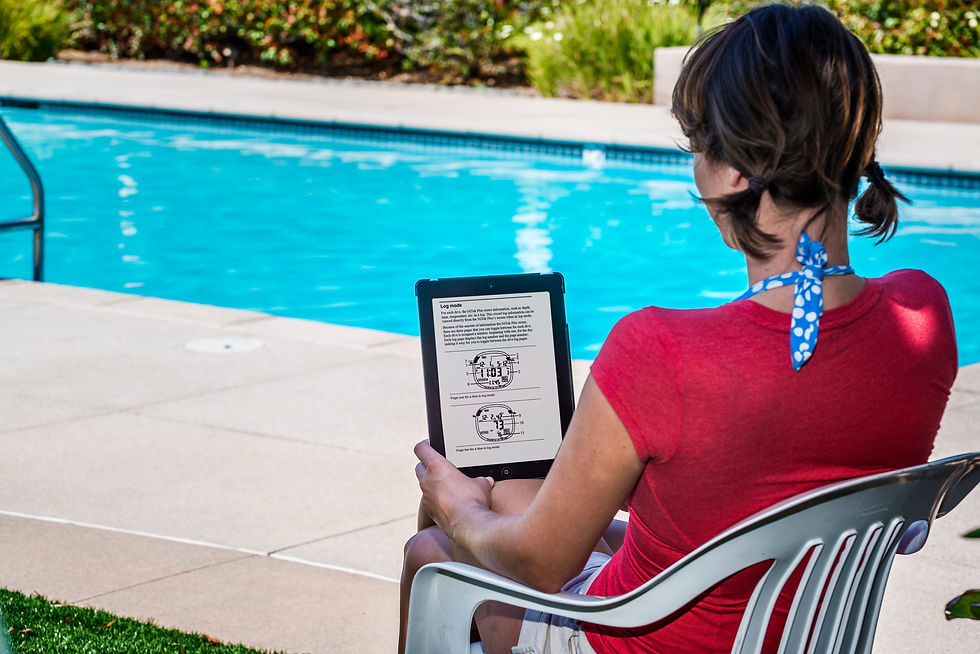
Work through the chapters at your own pace.
Learn about pressure, buoyancy, safety procedures, and dive planning.
Answer knowledge reviews, quizzes, and a final exam online
Finishing the PADI Open Water Diver e-learning before you travel means your time in Cancun can focus on skills and dives rather than classroom time.
Step 2: Pool Training In Cancun
On day one, after your check-in, meet your instructor and complete:

Gear fitting and safety briefing
A confined water session in a pool or pool-like area
All five sections of the confined skills, including mask work, buoyancy, regulator skills, and emergency practice
This is where you get used to breathing underwater and start building relaxed habits. Everything is done in shallow water where you can stand up if you need a moment.
Step 3: Four Open Water Dives
After the pool, you are ready for the good part.
Most PADI Open Water Certification Cancun schedules with Manta look like:

Day one afternoon - two open water dives at MUSA and Manchones, practicing basic skills on real reef and statues.
Day two - two more open water dives on slightly deeper reefs within beginner limits, joining the patterns you learned into normal dives.
During these four dives you will:
Descend and ascend under control.
Clear your mask, recover your regulator, and share air with a buddy.
Use your BCD and breathing to hover and move over coral without touching it.
By the end of dive four, your instructor has seen you repeat these skills in real conditions. That is what turns you from a supervised guest into a certified diver.
Junior Open Water For Kids And Families
If you have kids ages 10 to 14, the PADI Open Water Junior certification is usually the right fit.
PADI sets clear age and depth limits:

Minimum age 10 years to start Junior Open Water
Ages 10 to 11 are limited to about 12 meters or 40 feet and must dive with a parent, guardian, or PADI Professional.
Ages 12 to 14 may go to 18 meters or 60 feet, and must dive with a certified adult buddy.
Manta’s Junior paths, described on PADI Junior Open Water FAQ
Two-day format similar to adult courses
Kid-sized gear and calm sites at MUSA and Manchones
Flexible day two scheduling and extra coaching for younger students
Options where a certified parent or guardian joins as a diving buddy
Families often combine this with extra snorkel or reef days so younger siblings can still be part of the boat fun even if they are not old enough to train yet.
Choosing The Right Version:
Open Water 2 Day
Open Water + Plus (1Extra day training)
Open Water + Plus (1Extra day training in Cozumel)
Scuba Diver
Not everyone needs the same Open Water route. On the booking pages for Cancun Open Water Courses, you will see several variations tailored to your schedule and comfort level for training, all while strictly adhering to PADI training standards.
Standard Two Day Open Water
This is the core Manta program:
PADI eLearning at home
One day of pool plus two ocean dives
One more day with two additional ocean dives
Certification processing and digital PADI card
If someone says they did learn to dive in Cancun with Manta, this is usually what they mean.
Three Day Open Water + 3 day / + Cozumel - Options
If you want more time in the water and a classic “graduation” day, look at the three-day options that add Cozumel:

The first two days follow the standard schedule.
The extra day lets you do more local diving in Cancun or in Cozumel after the requirements are complete.
That gives you one more chance to practice with an instructor on some of the most famous reefs in the region.
PADI Referral Paths
If you started your Open Water somewhere else, Manta offers:
Referral programs that combine confined water and ocean dives
Open water only referral options if you have already finished pool training
These are perfect if your local shop handled theory and pool in cold water, and you want to complete certification in warm blue water instead.
One Day PADI Scuba Diver And Upgrade
If your trip is very short, the one-day PADI Scuba Diver course gives you a subset of Open Water, with shallower depth limits and a requirement to dive under professional supervision.
Later, you can return for a Scuba Diver upgrade day that completes the remaining skills and dives so your certification becomes full Open Water.
Training From Cancun
Choose Cancun if you want:
Easy access from Hotel Zone resorts
Very short boat rides to MUSA, Manchones, and outer reefs
Simple logistics for mixed trip schedules
Most guests doing PADI Open Water certification in Cancun will book through Cancun Open Water Courses and use the PADI Open Water Training FAQ to double-check what to expect.

Tips For Your First Training Dives
A lot of nervous energy goes into that first morning. Here are simple habits that make a big difference, whether your focus is scuba diving basics or the long-term goal of scuba certification in Cancun.
Stay relaxed - Everyone is a beginner once. Breathe slowly, move gently, and let the gear do the work.
Listen carefully - Briefings on the dock and at the pool cover most of what you will actually do underwater.
Equalize early and often - Gently equalize your ears on the way down rather than waiting for discomfort.
Use hand signals - Practice “OK,” “not OK,” “up,” “down,” and “low on air” on the boat so they feel natural later.
Stay close to your buddy and instructor - You learn more and feel calmer when you are within easy reach.
Hydrate and rest - Drink water, use sunscreen between dives, and get a decent night’s sleep before training days.
Your instructor’s job is to keep things calm and predictable so you can focus on learning. Your job is to show up curious, honest about how you feel, and willing to practice.
What Comes After Open Water
Open Water is the foundation. Once you have your card, you can:
Join fun dives and reef trips on Scuba Cancun - Certified Diving.
Improve navigation, buoyancy, and awareness with PADI Advanced Open Water.
Build confidence and leadership with PADI Rescue Diver Course if you enjoy helping others.
Some divers are happy staying at the Open Water level for years. Others quickly fall in love with night dives, wrecks, or photography and keep going. There is no wrong path. The key step is getting that first certification done well.
Next Steps: How To Start Your PADI Open Water Journey

If you are ready to move from “someday” to “I am getting certified,” a simple plan looks like this:
Decide who is taking the course and when
Adults on the standard Open Water path
Kids aged 10 to 14 on PADI Open Water Junior certification
Choose your base and travel dates.
Cancun hotels
Get Your Flights
Pick the version that fits.
Standard two-day Open Water
Three-day Open Water plus Cozumel
Junior Open Water with guardian
Referral or Scuba Diver upgrade if you already began elsewhere.
Enroll in PADI Open Water Diver e-learning through Manta, so your theory is complete before you arrive.
For detailed questions about requirements, swim tests, junior limits, or schedules, your best reference pages are:
If you don't think you are ready to dive in with a full course, you can always try a Discover Scuba dive first with Manta Divers.
When you are ready to check dates or availability, send a message on WhatsApp at +52 998 238 2116 or use the booking buttons on Cancun Open Water Courses.
We will help you match your calendar to the right course version so your first dives are as calm, safe, and memorable as they should be.

For full course details, prices, and what is included, see our PADI Open Water course page.